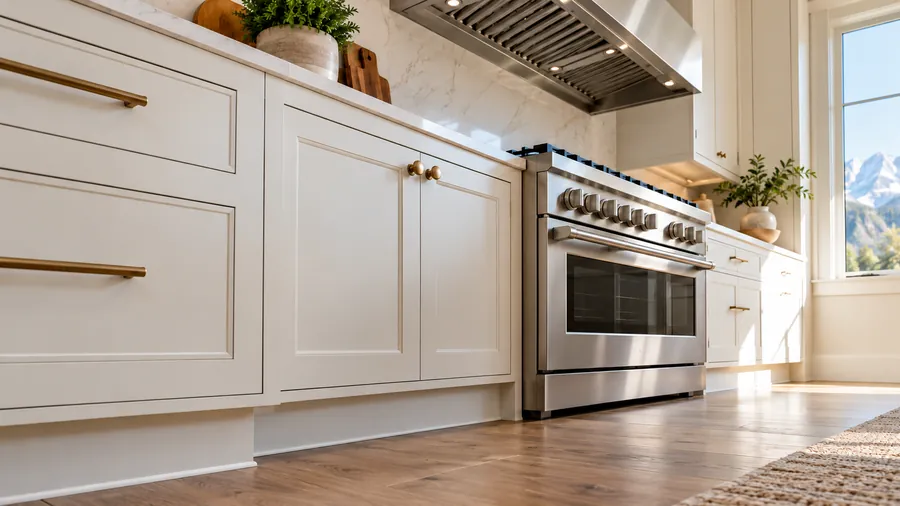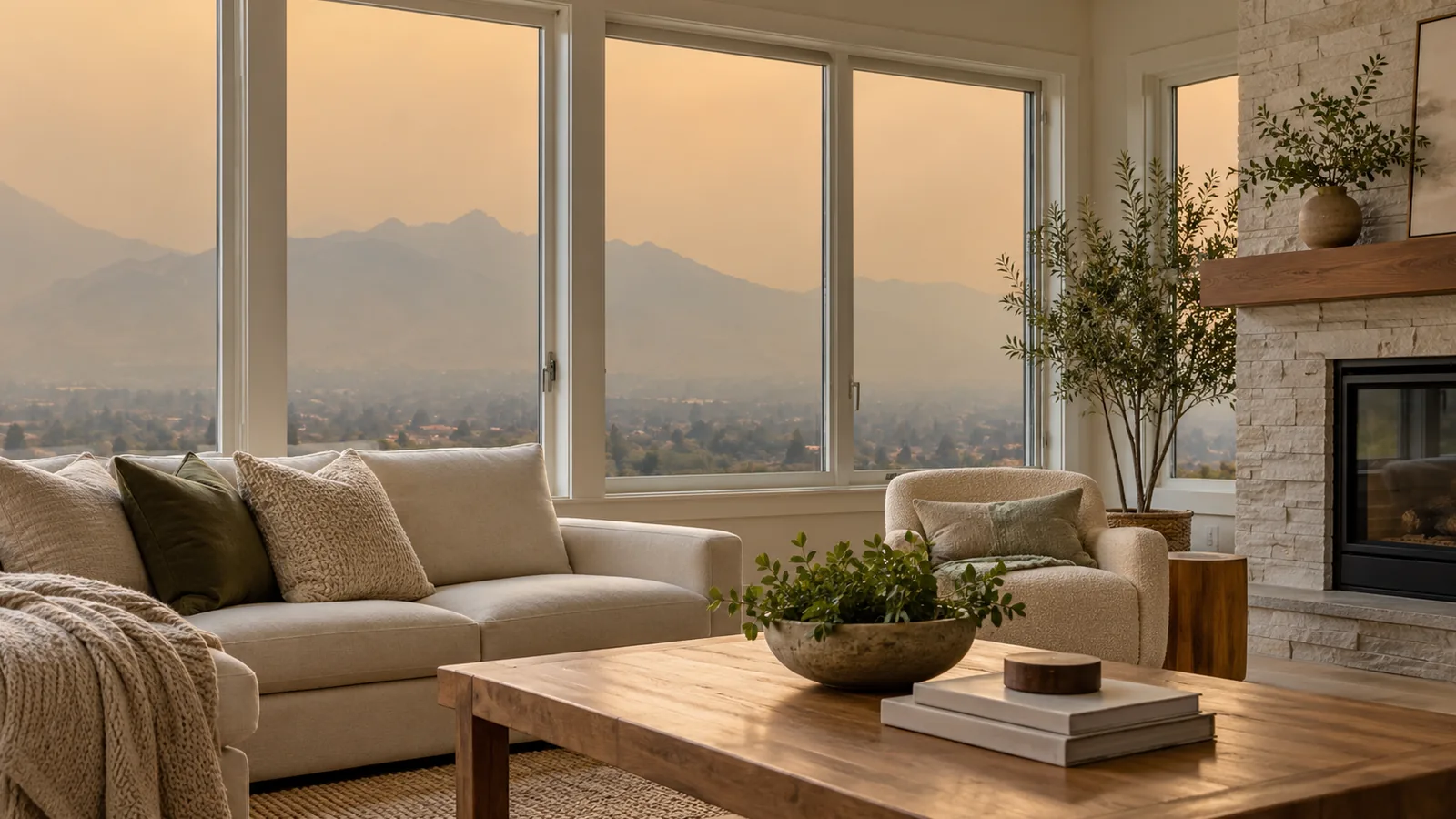
On bad air days in Utah, the goal is to keep wildfire smoke and pollen out, run a clean HVAC filter, and damp-clean the surfaces where fine particles settle. Close and latch windows and doors, set the system fan to recirculate, damp dust and vacuum with a HEPA filter, and skip dry sweeping and aerosol sprays. After a heavy smoke week, a professional deep clean resets the film that builds up on sills, vents and floors.
See prices and book a deep cleanUtah's bad air days come in two waves: summer and early fall, when regional wildfire smoke drifts into the valley, and spring, when tree and grass pollen ride canyon winds through every open door. You cannot control the air outside, but you can control how much of it settles into your home. These are the cleaning and sealing habits that make the biggest difference for indoor air.
Why smoke and pollen end up indoors
Wildfire smoke is made of extremely fine particles that ride air currents through any gap: door sweeps, window tracks, fireplace flues and the tiny leaks around frames. Pollen works differently. It arrives on shoes, pets, clothing and hair, then sheds onto floors, upholstery and bedding. Both settle as a fine film on sills, blinds, fan blades and vents, and ordinary dry dusting can push them right back into the air you breathe.
Seal and prep your home before a smoke event
When a smoke forecast appears, spend an hour on the envelope of your home. This checklist covers the spots that let the most outdoor air in:
- Close and latch every window before smoke arrives, then check door sweeps and weatherstripping for gaps
- Close fireplace dampers and any fireplace fresh-air intakes you control
- Set the HVAC fan to recirculate so the system filters indoor air instead of pulling in smoke
- Pick one door for coming and going, and keep a mat outside it and a tray for shoes inside
- Wipe pets' paws and coats with a damp cloth after time outside
- Skip candles, incense and smoky stovetop cooking while outdoor air is bad
Clean for air, not just for looks
On bad air days the standard cleaning order changes. You want to capture particles, not stir them:
- Damp dust with microfiber, working high to low, so particles stick to the cloth instead of drifting
- Vacuum carpet and rugs with a HEPA filter, slowly, in the rooms people use most
- Damp mop hard floors; a dry broom pushes fine ash and pollen back into the air
- Wipe window sills and tracks, where pollen and ash collect in the corners
- Wash bedding and throw blankets on hot during peak pollen weeks
If you want a repeatable version of this routine for the whole year, our biweekly house cleaning checklist lays out a room-by-room order that works for busy households.
A bad air day plan, room by room
| Area of the home | Before a smoke event | During a smoke event |
|---|---|---|
| Windows and doors | Clean sills and tracks, check seals and sweeps | Keep closed and latched |
| HVAC system | Fit a fresh filter and write the date on the frame | Fan on recirculate, filter running |
| Floors | Vacuum carpet with a HEPA filter | Damp mop main rooms daily |
| Entryway | Shake mats outdoors, set out a shoe tray | Leave shoes by the door, wipe pet paws |
| Bedrooms | Wash bedding in hot water | Keep doors closed with filtered air |
| Soft surfaces | Vacuum upholstery and curtains | Skip dry beating or shaking textiles |
Change the HVAC filter more often during smoke season than the schedule printed on the package suggests, since a loaded filter strains the system and lets fine particles pass. If the air in your home still feels heavy, an appropriately sized portable purifier with a true HEPA filter helps in the rooms where you sleep.
Utah note: Spring canyon winds off the Wasatch push pollen straight down into the Salt Lake Valley, and summer wildfire smoke settles into that same bowl. Plan your sealing and filter changes around those two seasons, not just around winter.
When professional help makes sense
After a long stretch of smoke days, a fine film ends up on blinds, vents, sills, baseboards and floor edges that a quick weekly wipe never fully touches. A one-time deep clean resets that layer, and from there a regular schedule keeps it from building again. Deep cleans at Wasatch Cleaners start at $409 for a three-bedroom home, with flat prices set before the visit. You can see your exact number in about a minute at our booking page, and if you are deciding between a deep clean and lighter ongoing visits, our guide on deep cleaning vs regular cleaning explains the difference.
Get your price and pick a dateQuestions people ask
Should I open windows on a bad air day to air out the house?
No. When outdoor particulate levels are high, opening windows trades the problem you smell indoors for the one outside. Run the HVAC fan on recirculate with a fresh filter, and open windows only after air quality returns to a healthy range.
How often should I change my HVAC filter during wildfire season?
Check it monthly during smoke season rather than following the package schedule. Hold it up to a light: if you cannot see light through it, replace it. A loaded filter strains the blower and lets fine particles pass back into your rooms.
Does vacuuming actually help with smoke particles in carpet?
Yes, if the vacuum has a sealed HEPA filter. Standard vacuums can exhaust the finest particles back into the room. Vacuum slowly in high-traffic rooms during smoke weeks, and damp mop hard floors on the same days.
Is an air purifier enough on its own during a smoke event?
A purifier with a true HEPA filter helps a lot, but it only handles what is already airborne. Sealing gaps, recirculating HVAC air, and damp cleaning the surfaces where particles land are what keep the total load down.