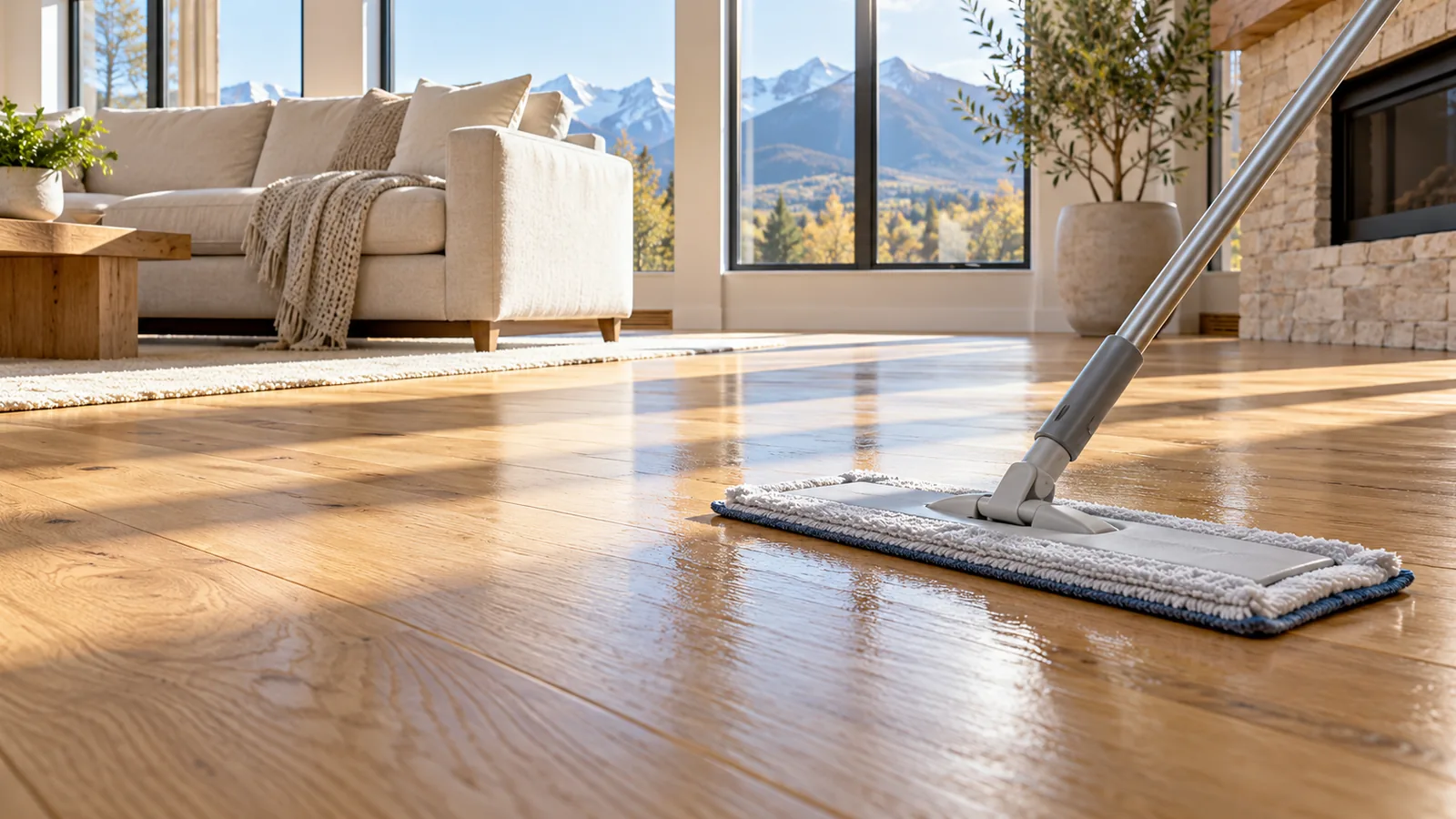
Dry dust or vacuum the floor first, then damp mop with a pH-neutral hardwood cleaner, wringing the mop until it is barely damp. Weekly cleaning with almost no water, plus keeping indoor humidity steady through Utah's dry seasons, is what protects the finish and prevents gaps between boards.
See the price for a floor-focused cleanHardwood floors are one of the most common flooring choices in Utah homes, and one of the most commonly damaged by well-meaning cleaning. The finish is tougher than people think, but it has two real enemies: standing water and gritty residue, and Utah's dry, shifting seasons add a third. This guide covers the mop method that works, the products to keep away from wood, and a schedule for keeping floors looking right year-round.
The correct way to mop hardwood floors
The goal is to lift dirt with a damp pad, never to wet the floor. Work in this order every time:
- Dust mop or vacuum with a hard-floor setting first. Dragging a wet mop across grit grinds it into the finish like sandpaper.
- Fill a bucket or spray bottle with a pH-neutral cleaner made for wood floors, mixed exactly as the label says.
- Dampen a microfiber mop and wring it hard. When you touch the pad, it should feel cool and slightly damp, not wet.
- Mop with the grain of the wood, in long straight passes, rinsing and wringing the pad often.
- Buff any damp spots dry with a clean towel, especially along board edges and seams where water can sit.
If the room needs more than this, do a second pass rather than adding more water. Two light passes are always safer than one wet one.
Products and tools to avoid on hardwood
Wood floors do not need aggressive chemistry. Most finish damage in Utah homes comes from the wrong tool, not too little effort. Keep these off your floors:
- Steam mops. Pressurized steam drives moisture through the seams and can cloud or lift the finish.
- Vinegar solutions. Acid dulls many modern finishes over time, even when diluted.
- Soap-based or oil cleaners that leave residue. They attract dust and make floors hazy and slippery.
- Abrasive pads, scrub brushes and paste wax on prefinished floors.
- Excess water from a dripping mop, a spray bottle used too generously, or wet shoes after mopping.
Before trying any new product, test it on a hidden spot such as inside a closet and follow the maker's care instructions for your specific floor.
Humidity habits that prevent gaps and cracking
Wood is a living material. It swells when the air is humid and shrinks when it is dry, and Utah swings hard in both directions: bone-dry desert air in summer, heated indoor air in winter, and wet shoulder seasons in between. Wide swings are what open gaps between boards, raise splinters and loosen boards at the ends.
- Keep indoor relative humidity in the 30 to 50 percent range year-round. A simple hygrometer tells you where you stand.
- Run a humidifier in the rooms with wood floors from late fall through early spring, when heating dries the air the most.
- Wipe up spills and tracked-in snow melt the moment you see them, both for the water and for the grit dissolved in it.
Utah note: Utah's dry air and static are rough on wood finishes, and fine desert dust works its way into floor seams. Combine that with canyon wind seasons that blow grit through open doors, and entry mats at every outside door become the most affordable floor protection you can buy.
A simple hardwood care schedule
Consistency beats intensity. This table keeps a wood floor in shape without overdoing any task.
| How often | Task | Why it matters |
|---|---|---|
| Daily | Dust mop or vacuum grit, especially near entries | Grit scratches the finish and grinds into seams |
| Daily | Wipe tracked-in moisture and salt residue at entries | Water and salt both damage finish and boards |
| Weekly | Damp mop with pH-neutral wood cleaner | Removes film and dust without over-wetting |
| Weekly | Check felt pads on furniture legs | Sand caught in pads acts like sandpaper |
| Monthly | Clean along baseboards and floor edges | Buildup at the edges dulls the room's edges first |
| Seasonally | Check humidity in each room with wood floors | Catches dry-air shrinkage before gaps open |
| Yearly | Deep clean or screen-and-recoat assessment | Worn finish is far cheaper to refresh than sanded floors |
A recurring professional visit covers the weekly and monthly items on this list, which is why many wood-floor homes book a set schedule.
When professional cleaning makes sense
Weekly upkeep is very doable at home. What is harder is the edges: floor edges along baseboards, dust film that builds up under furniture, and the general reset a busy week steals time from. A standard recurring visit covers vacuuming and damp mopping of all hard floors following our written room-by-room checklist, and a first visit starts at $289 for a 3-bedroom home. Recurring plans bring the per-visit price down further. You can see your exact flat price instantly at our booking page. For background on what a recurring visit covers compared with a deep clean, see deep cleaning vs regular cleaning.
Get your flat price in 60 secondsQuestions people ask
Can I use a steam mop on hardwood floors?
No. Steam forces moisture through the seams between boards and can cloud, lift or soften many finishes. Manufacturers of prefinished hardwood generally advise against steam mops. A barely damp microfiber mop with a pH-neutral wood cleaner does the job more safely.
Is vinegar a safe cleaner for hardwood?
It is commonly recommended, but we advise against it. Vinegar is acidic, and repeated use can dull or soften many modern polyurethane finishes over time. A cleaner labeled for hardwood floors is pH-neutral, removes film and leaves no residue.
How often should hardwood floors be mopped?
For most Utah homes, a damp mop once a week is right, with daily dry dusting or vacuuming to remove grit. High-traffic entries and kitchens may need a midweek pass. More water less often is worse for wood than lighter, more frequent cleaning.
Why do gaps appear between my floorboards in winter?
Wood shrinks as indoor air dries out, and Utah winters are extremely dry once the heat runs. Gaps that appear in late fall and close in spring are usually humidity-related. A humidifier keeping rooms in the 30 to 50 percent range usually reduces them.