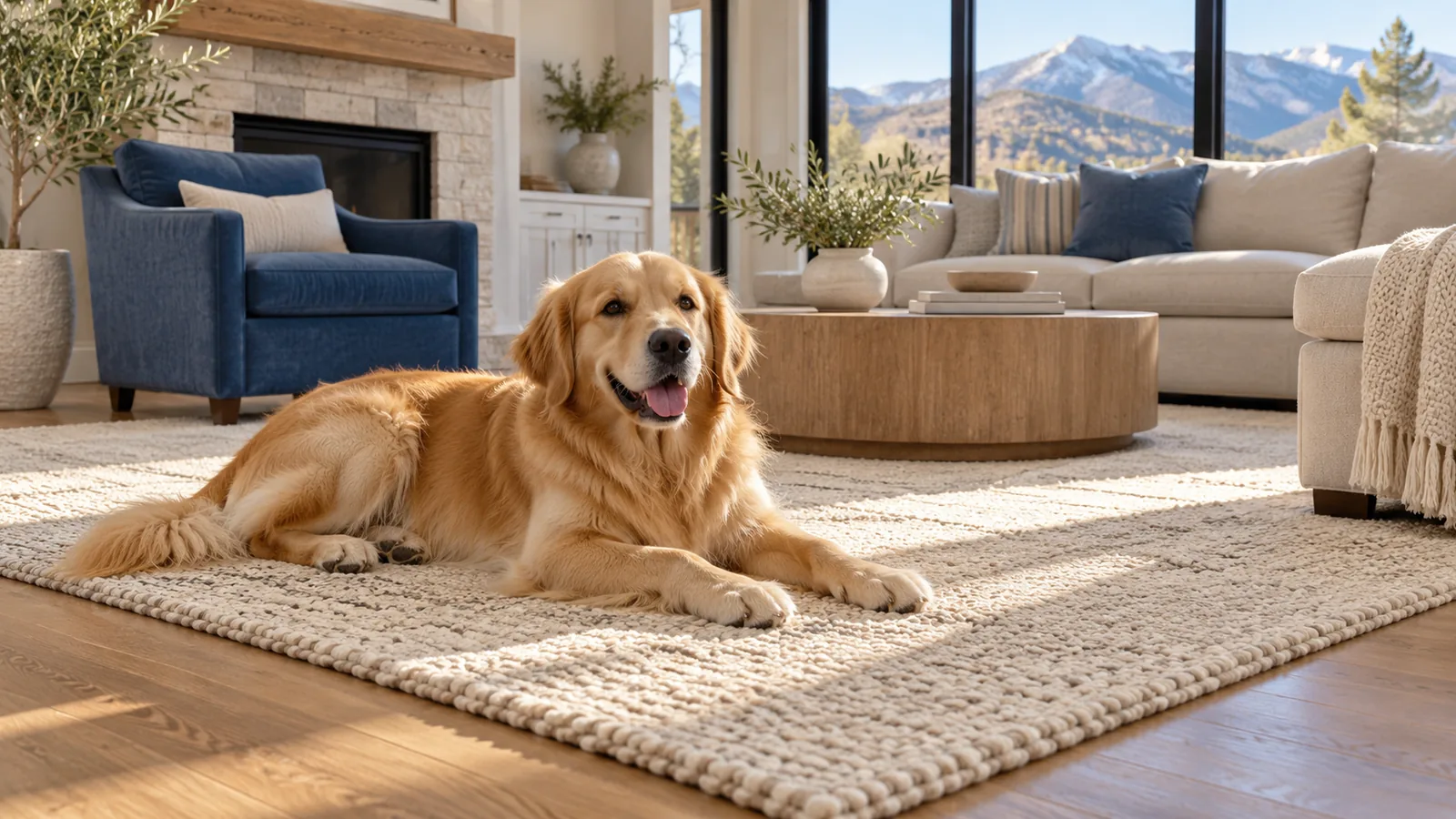
Keeping a home clean with pets means three things: staying ahead of shed fur, treating odors and accidents at the source, and keeping pets away from wet, freshly cleaned floors until they dry. A lint roller, a vacuum with an upholstery tool, and an enzymatic cleaner cover most of the work.
See the price for a pet-friendly cleanPets bring a lot of joy and a steady stream of fur, tracked-in dirt, odors and the occasional accident. None of it needs to win. The homes that stay fresh with animals in them share a few habits: fur removal on a schedule rather than when it becomes visible, odor treatment at the source instead of masking, and cleaning routines that keep products and wet floors away from curious paws. Here is how we approach it in pet homes.
Fur management that stays ahead of the shed
Most people wait until fur is visible, but by then it is worked into fabric and carpet backing. Remove fur on a schedule, and match the tool to the surface:
| Trouble spot | Why fur sticks there | Tool that works |
|---|---|---|
| Sofas and armchairs | Static and pressure weave fur into fabric | Rubber pet hair brush or slightly dampened rubber glove, then vacuum |
| Car seats and floor mats | Compacted fur in tight weave | Pet hair removal stone or rubber brush, then a strong vacuum pass |
| Carpet and rugs | Fur tangles around carpet fibers | Vacuum with a beater bar or turbo brush, slow overlapping passes |
| Bedding and throw blankets | Fur transfers from pets to fabric | Hot wash, then dryer with wool dryer balls before folding |
| Pet beds | Fur plus oils and dander together | Shake out, vacuum the bed, then wash the cover weekly |
| Hard floors and stairs | Fur drifts into corners and along edges | Microfiber dust mop, working edges and corners first |
| Clothing and curtains | Light static hold | Lint roller, or a damp sponge in one direction for large areas |
Work top to bottom, so drifting fur lands where you have not cleaned yet.
Odors: treat the source, not the air
Air fresheners mask odors for an hour. The molecules stay in the fabric and the smell returns. What actually works:
- Baking soda on carpets and rugs: sprinkle a light layer, let it sit 15 minutes, then vacuum slowly.
- Washing soft items that hold smell: pet beds, throw blankets, cushion covers and curtains on a regular schedule.
- Cleaning hard floors and baseboards, where dander and oils settle into film along the walls.
- Enzymatic cleaners on soft surfaces where a pet has marked; they break down the compounds that hold the smell.
If an odor returns to one spot, press a white cloth there after cleaning. Residue on the cloth means it needs another treatment.
Accidents: clean fast, clean deep
Urine soaks into carpet backing and pad within minutes, so speed matters. Blot, never rub, with clean towels until no more transfers. Then treat the spot with an enzymatic cleaner, working from the outside in, and let it dwell as the label directs.
On hardwood, wipe the spot, then clean the area with a barely damp cloth and dry it fully so moisture does not sit on the boards. Test any cleaner on a hidden spot first and follow the maker's care instructions. If a spot has soaked into the pad, or an odor will not lift after repeated treatment, that is a job for a professional with extraction equipment.
Keeping pets safe during and after cleaning
Most cleaning incidents with pets come from wet surfaces, residues or fumes. A few habits prevent nearly all of them:
- Keep pets out of the room with a gate or closed door while you clean.
- Never mix bleach with ammonia or with acidic cleaners such as vinegar-based products. The fumes are dangerous for people and pets alike.
- Ventilate while you work: open a window or run a fan when using anything with noticeable fumes.
- Keep pets off floors until they are fully dry. Damp residue transfers to paws, and from paws to mouths, beds and sofas.
- Store all products in a closed cabinet out of reach, and wipe food and water bowls before refilling them.
Utah note: Utah's dry air means heavy static, and static is why fur clings to fabric here. A lightly humidified room plus a damp rubber glove pulls fur off upholstery far better than a dry brush. Spring shed season lands right as canyon winds blow dust indoors, so entries need extra attention.
When professional cleaning makes sense
Fur control is a volume problem, and it multiplies with every pet. If a weekly fur pass is eating your weekends, a recurring professional visit handles it on a set schedule. We also offer a pet hair pass as a $30 add-on for homes where fur is the main battle. Every visit follows our written room-by-room checklist with photo proof of key rooms, and recurring plans lower the per-visit price. A 3-bedroom standard visit starts at $289. See your exact flat price at our booking page, or pair this routine with our biweekly house cleaning checklist.
Get your flat price in 60 secondsQuestions people ask
How do I get pet fur off furniture that a vacuum misses?
Static is the problem, so fight it with rubber. A rubber pet hair brush, or a slightly dampened rubber glove, pulls fur from upholstery in one direction better than a vacuum alone. Roll it into piles, then vacuum the piles. Repeat weekly before fur works deep into the weave.
What is the safest way to clean up after a pet accident?
Blot the area with clean towels first, pressing firmly, then treat with an enzymatic cleaner that breaks down the odor compounds. Test the cleaner on a hidden spot and follow the label. Keep pets away from the area until it dries fully so they do not track residue to beds and bowls.
How do I keep my pet safe while I clean?
Keep pets out of the room with a gate or closed door, ventilate while you work, and never mix bleach with ammonia or acidic cleaners. The main risk is residue on wet floors, so keep pets off them until completely dry.
How often should a home with pets be vacuumed?
Two to three times a week for carpet and rugs, with a slow pass over upholstered furniture weekly and pet beds washed weekly. Shedding breeds in spring may need daily quick passes in the rooms they use most. Slow, overlapping passes remove far more fur than fast ones.