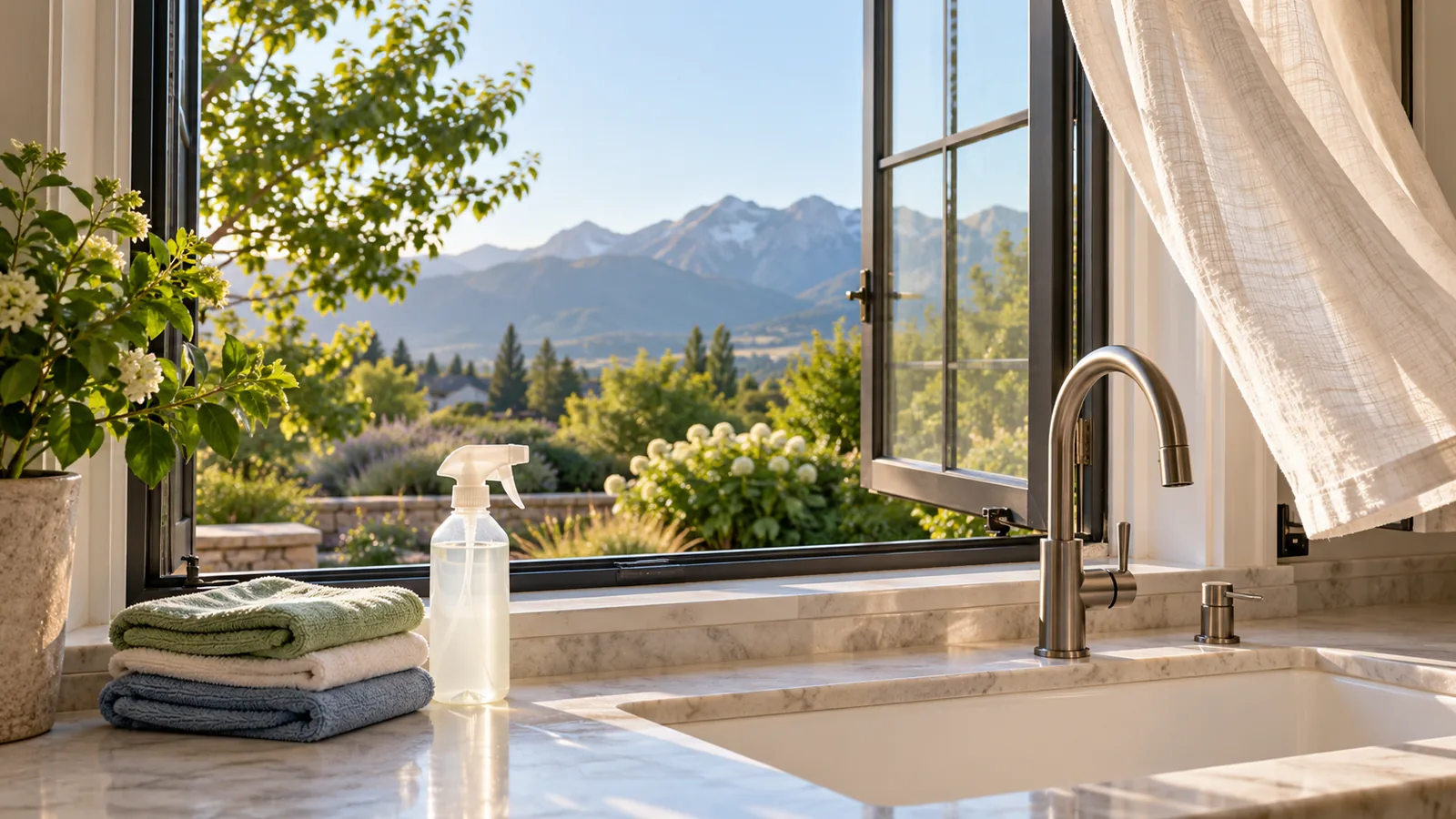
Safer cleaning is mostly about habits, not special products: ventilate the room, dilute concentrates exactly as the label says, never mix chemicals, and let microfiber and plain water handle most everyday jobs. Store products up high in original bottles, test a hidden spot on delicate surfaces, and follow the maker's care instructions. Those few habits cut fumes and residue more than any marketing word on a bottle.
See prices and book a cleaning"Green cleaning" gets used to sell everything from vinegar to premium product lines. At home, the safer approach is simpler and cheaper: change how you clean before you change what you buy. This guide covers the handful of habits that lower fumes and residue in a real household, and the do and do not table worth printing for the utility room.
What safer cleaning actually means
No cleaning routine is chemical-free, and nothing that dissolves grease and kills germs should be treated like water. Safer cleaning means controlling four things: how much product you use, how much of it gets into the air, how long it sits on a surface, and how it is stored. Get those right and almost any mainstream product can be used with far less exposure than the average home gives it.
Habits that cut fumes and residue
- Ventilate while you clean. Open a window a few inches or run the exhaust fan, especially in small rooms like bathrooms and laundry closets. Fumes concentrate fast in a closed space.
- Dilute concentrates to the label ratio. A stronger mix is not a stronger clean, it is just more residue left on the surface and more fumes in the air.
- Respect contact time. Spraying and immediately wiping removes far less than letting a disinfectant sit for the minutes the label lists.
- Keep products in original bottles. Decanting into unlabeled containers or mixing leftovers together is how accidents happen.
- Never mix chemicals. Bleach mixed with ammonia or with acidic products like vinegar or toilet bowl cleaners releases toxic gas. Use one product, rinse, then move on.
- Store up high or locked. Cabinets above shoulder height, or locked, and never inside reach of children or pets.
The do and do not table
| Do | Do not |
|---|---|
| Open a window or run the exhaust fan while cleaning | Spray products in a small closed room |
| Dilute concentrates to the labeled ratio | Assume more product cleans better |
| Damp dust with microfiber so particles stick to the cloth | Dry dust, which just pushes particles into the air |
| Test a hidden spot and follow the maker's care instructions | Use one strong product on every surface, including stone and wood |
| Use cool or warm water for most mixing | Mix bleach with ammonia, vinegar or other cleaners |
| Keep products in original labeled containers, stored up high | Decant into drink bottles or leave sprays within reach of kids and pets |
Microfiber and water: the underrated default
For most everyday jobs, plain water and a good microfiber cloth do more than people expect. The fibers are split finer than a strand of silk, so they mechanically grab dust, fingerprints and light grease instead of smearing it. Use water and microfiber for dusting, counters, stainless fronts, glass and spot-mopping, and you remove the need for a spray, a fragrance and a residue all at once.
Reach for an actual product only when the job calls for it: disinfecting after illness, cutting soap scum, or cleaning the toilet. Even then, a diluted solution in a spray bottle, applied to the cloth rather than the air, keeps exposure low. Our biweekly house cleaning checklist shows where these quick wins fit in a normal week.
Utah note: Utah's dry air is hard on noses and throats, and dry winter days make dust cling with static. Cutting back on aerosol sprays and dry dusting matters more here than it would in a humid climate, especially for anyone prone to headaches from strong scents.
When professional help makes sense
These habits are easy to keep up, but there are stretches of life where the cleaning itself is the bottleneck: a new baby, a busy season at work, caring for a parent. A recurring professional clean keeps the baseline up so your quick habits actually work. Recurring plans at Wasatch Cleaners run weekly, every two weeks or monthly, each with a discount on every visit, and standard cleans for a one-bedroom start at $219. Supplies are included, and every visit follows the same written checklist. You can compare options and book at our booking page.
Set up a recurring cleanQuestions people ask
Is it safe to clean the bathroom with the door closed?
It is better not to. Small rooms concentrate fumes quickly. Run the exhaust fan or open a window a few inches while you clean, and step out for a few minutes if you feel any sting in your eyes or throat.
Can I mix vinegar and baking soda for a stronger cleaner?
Mixing them mostly neutralizes both, so it cleans no better than either alone, and the fizz can push droplets into the air. The bigger rule is never to mix bleach with ammonia or with acids like vinegar, which releases toxic gas.
Does using more product than the label says clean better?
No. Beyond the labeled dose, extra product mostly leaves residue that attracts dirt and adds fumes. Disinfectants also need their full contact time on the surface, which spraying more does not replace.
Are plant-based or natural products automatically safe?
No. Any concentrated cleaner deserves the same respect: ventilate, dilute as directed, keep it off skin and out of reach of children and pets, and never assume a friendly word on the front of the bottle means it is mild.